
Automated Wound Healing & Scratch Assay Closure Quantification
Measure cell-free scratch area rather than noisy width lines, compute percent closure across timepoints, and compare treatment curves automatically.
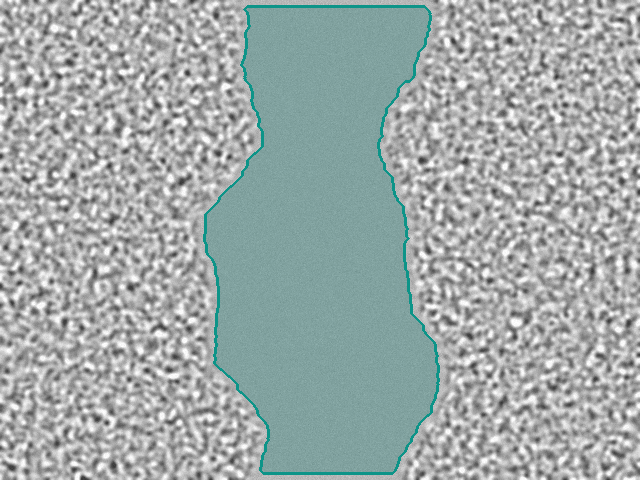
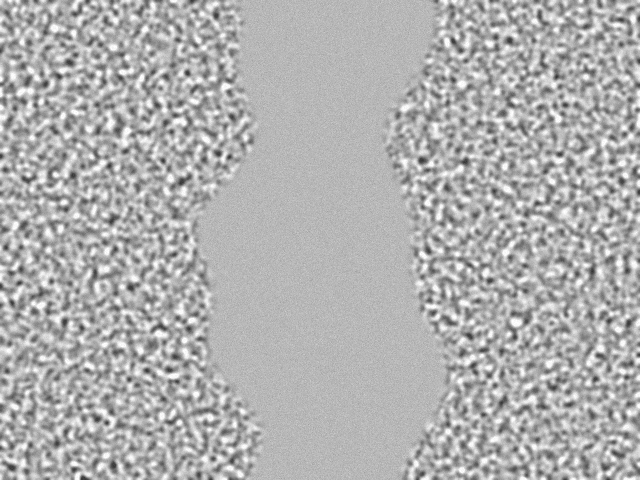
Full cell-free gap area extracted by local texture variance and paired to each well's 0 h baseline.
Typical lab studies
- Cancer cell migration inhibition assays across compound dilutions (0h, 12h, 24h, 48h)
- Endothelial or keratinocyte wound-closure screens in 6-well to 96-well plates
- Knockdown / CRISPR migration phenotype validation
- 1Timepoint-by-timepoint wound area (mm² and % frame) and % Closure Excel/CSV tables
- 2Boundary overlay images showing the exact detected cell-free gap for every frame
- 3300 dpi time-course migration curve SVG/PDF with group statistics
- 4One-click review view for wells with debris or detached cell sheets
- 5Reproducible Python script and Methods paragraph
Manual ImageJ vs. MicroQuant batch
| Dimension | Manual ImageJ / CRO | MicroQuant ($199 batch) |
|---|---|---|
| Gap measurement geometry | 3 manual width lines vary with click position | Full irregular gap area across entire field |
| Phase-contrast lighting shifts | Brightness thresholds break between timepoints | Texture-variance segmentation invariant to gray shift |
| Time-series pairing | Manual matching of 0h vs 24h filenames in Excel | Automated well pairing and closure curve plotting |
Frequently asked questions
How should I name my 0 h, 12 h, 24 h, and 48 h scratch assay images?
Include the group, well ID, and timepoint in the filename (for example, Control_W1_0h.tif and Control_W1_24h.tif). Our pipeline automatically pairs each well against its 0 h baseline to calculate % Closure.
Does texture-variance segmentation work on uneven phase-contrast lighting?
Yes. Because local spatial variance responds to cell boundaries and phase halos rather than absolute gray brightness, illumination drift between 0 h and 24 h does not break the cell-free mask.
What if floating debris lands inside the scratch gap in one frame?
Every frame includes a boundary overlay in your delivery review workspace so you can flag or exclude a contaminated well and recompute the group migration curve in one click.